Was ist die Mindestmaschinenleistung und -drehzahl beim Reibbohren?
Home / Blog / Was ist die Mindestmaschinenleistung und -drehzahl beim Reibbohren?
Key Takeaways
You don’t need expensive machinery to start friction drilling
A 1 kW, 2,400 RPM drill is enough for M6 holes
Proper RPM and stable axial force are critical
Flowdrill offers clean, strong, chipless holes
Request your required speeds and feeds, machine power, and setup parameters.
Friction drilling, also known as Flowdrill, is a chipless drilling process that creates strong, form-fitting holes in metals without cutting. It uses heat generated by high-speed rotation and pressure to soften the material and push it aside, forming a bushing. But what kind of machine do you actually need to get started with this process?
You don’t need a complex setup
Contrary to what some engineers assume, you don’t need a CNC machine or an advanced production line to use Flowdrill technology. In fact, many small to medium workshops already have the right equipment on hand.
What do I need?
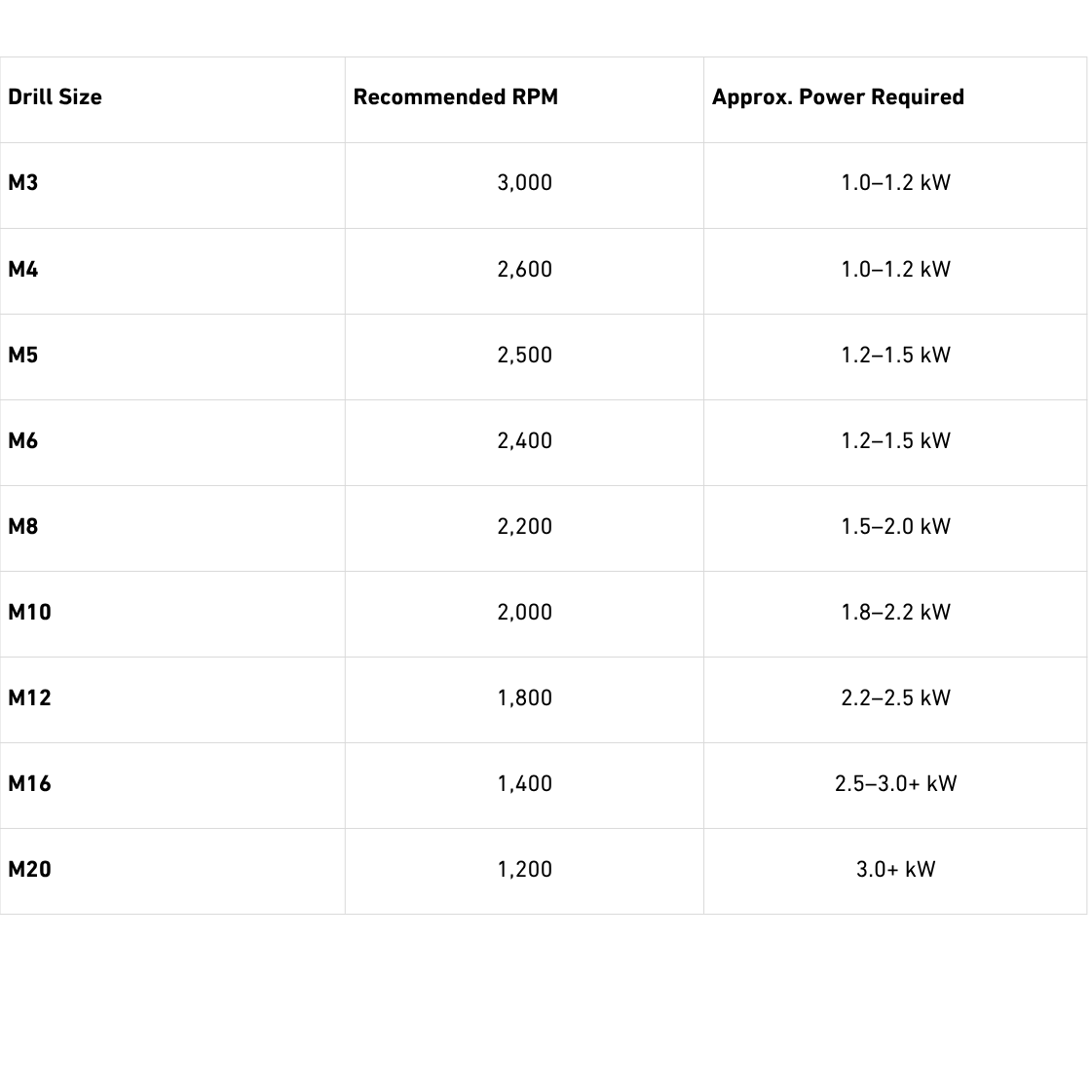
A standard pillar drill with 1 kW of power and a speed of 2,400 RPM is sufficient to perform friction drilling up to M6 hole sizes in materials such as mild steel and aluminium. This makes it an ideal starting point for prototyping, R&D labs, and small production runs.
Flowdrill Speeds and Feeds: why RPM matters
Friction drilling depends heavily on speed, not cutting force. A key requirement is achieving the correct RPM (Revolutions Per Minute). Here’s a quick breakdown:
Keep in mind that larger drill diameters need lower RPM but higher torque, so your machine must have enough power to maintain speed under load.
What about drill presses and manual machines?
Many manual drill presses and semi-automated setups are more than capable of running Flowdrill tools, as long as they meet two essential criteria:
Reach and maintain the required RPM
Deliver stable axial force without excessive vibration
Check your motor’s power (in kW or HP), the maximum RPM setting, and whether your machine can handle the axial load required for forming instead of cutting.
Benefits of Friction Drilling with standard equipment
No chips, no cleanup
Strong, burr-free holes suitable for threaded connections
No special coolant or lubricant required
Compatible with aluminium, steel, stainless steel, and copper alloys
This makes it ideal for industries where cleanliness, strength, and speed matter. From automotive to HVAC, furniture, and light fabrication.
Want to Know If Your Machine Qualifies?
We’ve created a detailed datasheet that shows the exact Flowdrill speeds and feeds, required machine power, and setup parameters per drill size and material type. It includes practical tips for selecting the right friction drilling machine setup for your production environment.
Contact our technical support team for a machine capability check.