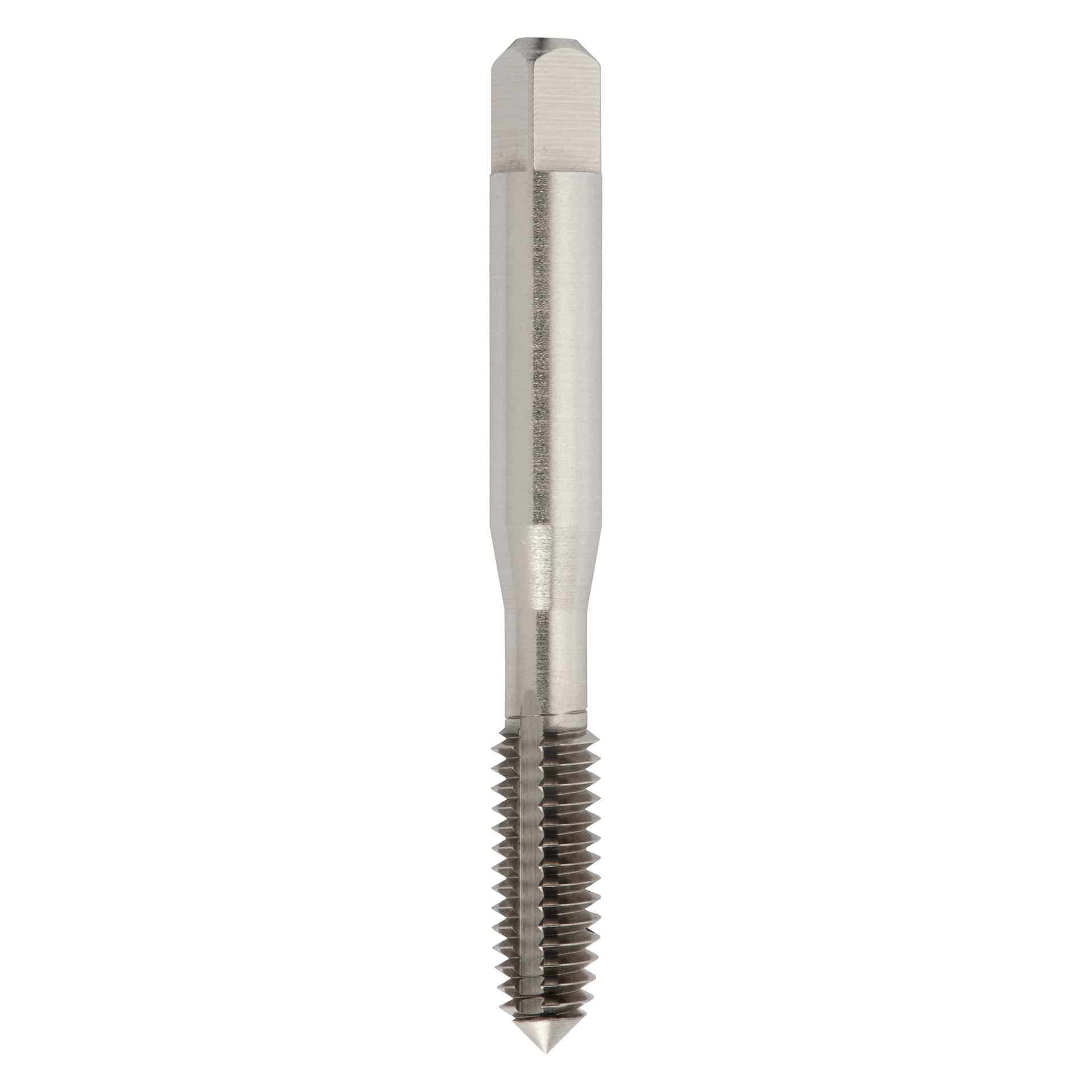
Flowdrill manufactures solid carbide friction drilling tools that use frictional heat to create funnel-shaped bushings in metal.
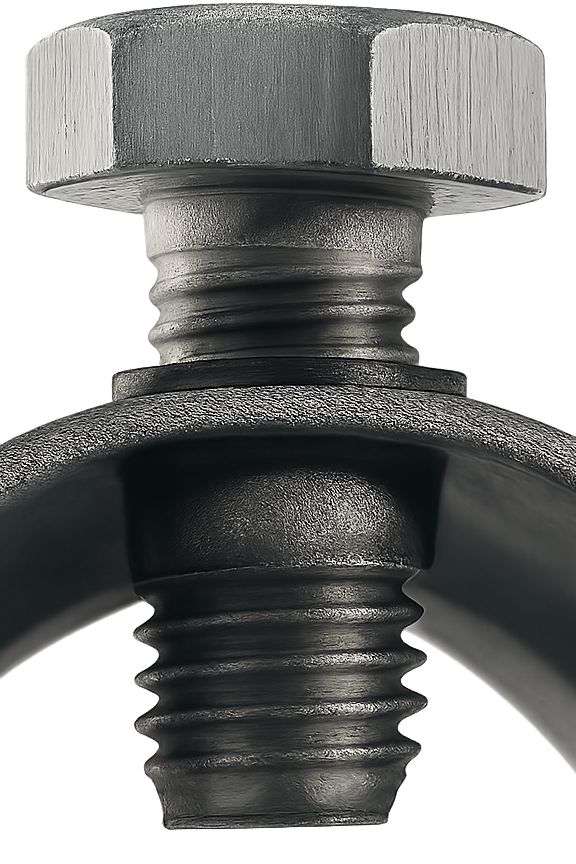
The process forms a bushing with a length of approximately three times the original material thickness.
This bushing can be threaded and may replace a blind rivet nut, press-in nut, or weld nut. original material and can replace a blind rivet nut, press-in nut, or weld nut.

For newcomers
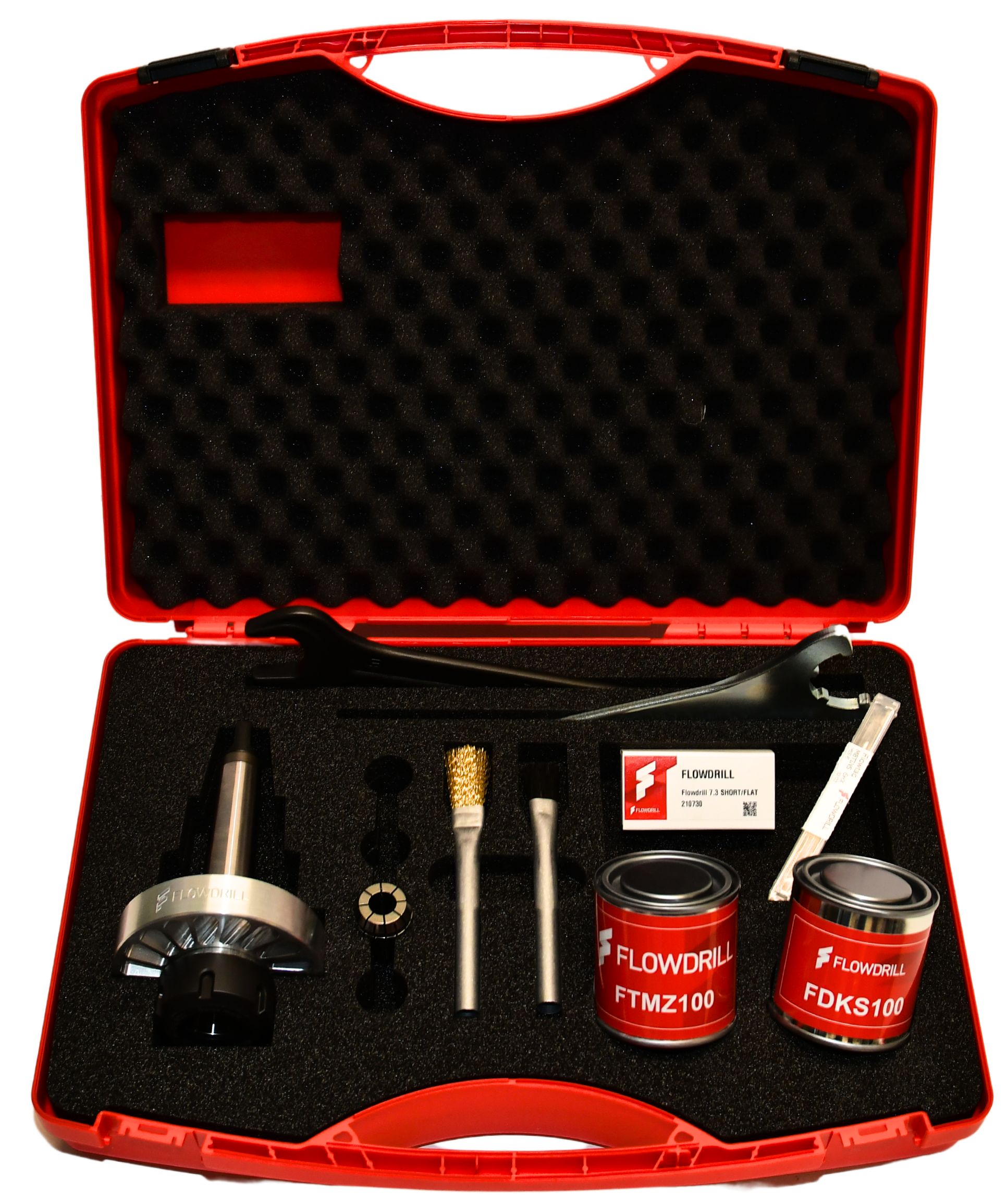
Getting started with Flowdrill for the first time? We’ve got you covered with the Flowdrill Starter Kit!
This kit comes in a red case and includes everything you need for friction drilling on a CNC machine, tube laser, or pillar drill.
We understand that friction drilling can sometimes seem complicated. That’s why we’re here to guide and support you. That’s what Flowdrill stands for!
Friction drilling works in almost all materials that are ductile and not brittle. Think of aluminium, stainless steel, and high-strength steel with 1000 MPa or more.
Not sure if your material is suitable? Feel free to contact us. We can quickly check this in our material database. If needed, we’ll perform additional tests to determine the possibilities.
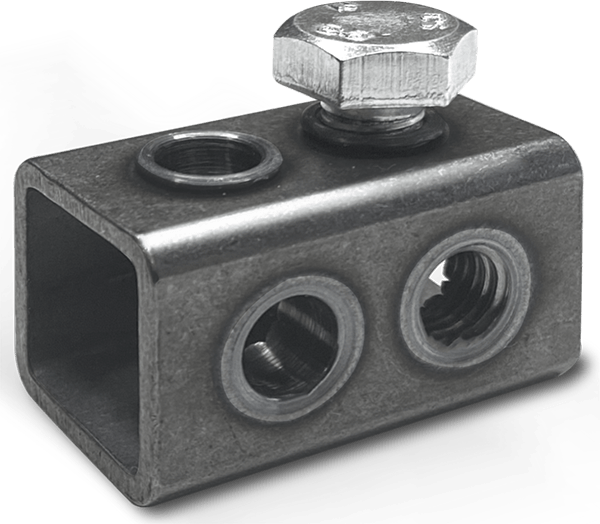
A Flowdrill friction-drilled connection is known for its high strength, depending on the material, wall thickness, thread size, and application. In many cases, it can be stronger than alternatives such as rivet nuts, blind rivet nuts, or press-in nuts. For example, a friction-drilled connection in 2.0 mm thick steel can withstand a force of up to 2.7 tons, approximately 26.5 kN. This makes it a strong and reliable alternative to conventional mechanical fastening methods.
An alternative to blind rivet nuts, weld nuts, and press nuts
Yes, friction drilling is a proven technology with a long history of success. The first friction drillings were developed after World War II. Since then, Flowdrill has continuously refined and improved the technology. Today, friction drilling is used daily by thousands of customers around the world as a reliable alternative to blind rivet nuts, weld nuts, and press nuts.
Do you have another question? We’re happy to help!
Have you seen our Knowledge Hub?
Here, you’ll find answers to (almost) all your questions about friction drilling.