
High-strength steel (e.g. 16MnCr5, 25CrMo4): Can be suitable with adapted process parameters. Some extreme types are not suitable. We’re happy to help you explore the possibilities.
Everything You Need to Know
Friction drilling is a technique for creating strong, durable connections in metal. But how do you get started? What materials and tools do you need?
In this Knowledge Hub, you’ll find everything you need to get started successfully. Whether you’re an experienced metalworker or just beginning, this guide will help you start with confidence.
Friction drilling is a process in which a special friction drill uses heat and pressure to plastically deform the metal.
This pushes the material upward and downward, forming a strong collar and sleeve.
As a result, you can create threads in thin metal sheets or tubes without needing additional fasteners like nuts or inserts.
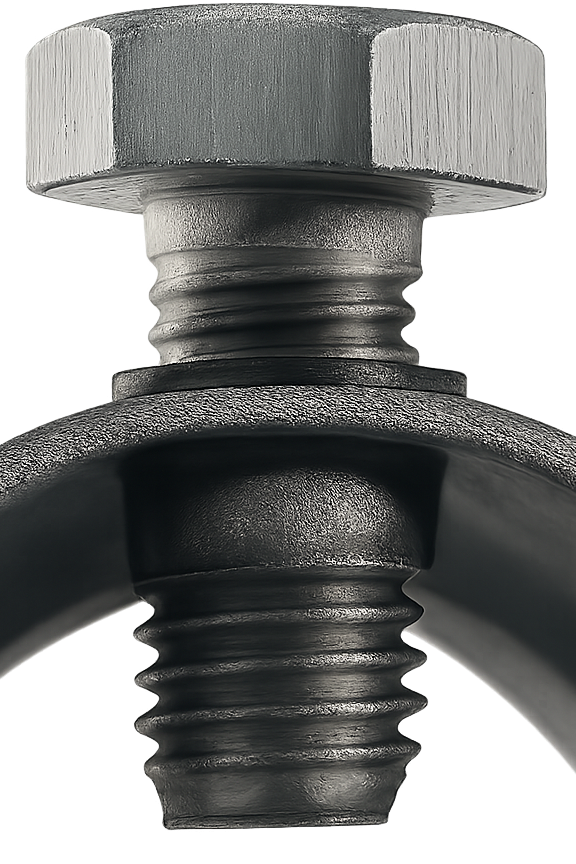
Friction drilling, is suitable for non-brittle metals. The process works best on materials that can handle deformation and heat without cracking, such as:
Friction drilling works excellently on metals that are ductile and have a lower melting point. The main suitable materials are:
Mild steel (S235): Commonly used in various applications. Frictiondrilling in S235 is no problem at all.
Stainless steel (304/316): Requires adjusted drilling parameters due to higher strength and heat generation. Local discoloration from heat is possible but can be treated with passivation techniques.
Aluminium 6060-T6 and other aluminium alloys: All types of aluminium are suitable for frictiondrilling. This is due to the low melting and deformation temperature.
Note: we do recommend using our specially developed Aludrill.
Copper and brass (CuZn39Pb3, CW614N): Is suitable for friction drilling, but requires adjusted parameters. Please contact us, we are happy to help you!
Some materials or areas on profiles are less or not suitable for friction drilling due to their thermal or mechanical properties. However, there is sometimes a possibility or a workaround.
Hardened steel (e.g. hardened 16MnCr5, hardened C45M): The material is too hard and causes excessive tool wear. Not suitable without special pre-processing. Contact us to discuss the possibilities.
Some coatings and protective layers may be damaged during friction drilling.
Galvanized steel
Powder coating and ED coating
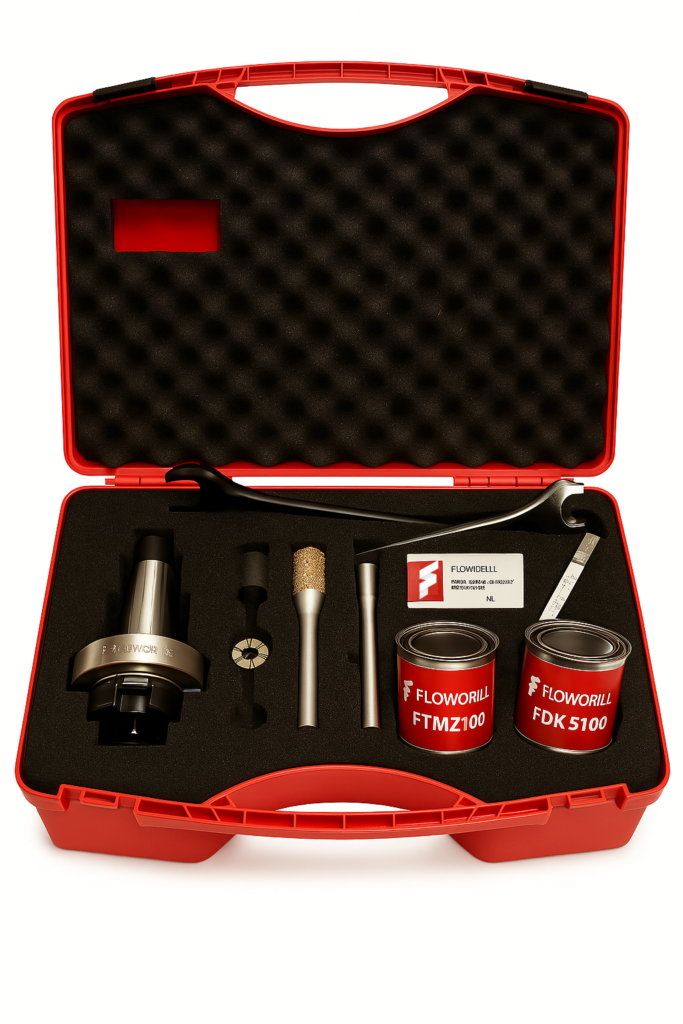
To start with friction drilling, you need the following:
All these essentials are included in the Flowdrill Starter Set!
Follow these steps to ensure a smooth and effective friction drilling process:
Download the full guide here to get started with friction drilling.
Yes. Flowdrill supports the integration of friction drilling into drill presses, CNC machines, robot cells, and custom-designed production cells.Our team has experience with on-site integrations and can help evaluate the application, define the correct tool setup, and advise on key process requirements such as spindle speed, feed rate, clamping, lubrication, and machine stability.
This helps engineers implement friction drilling as a reliable production process, whether in a drill press, an existing CNC machine, an automated robot cell, or a purpose-built production system. For certain applications, on-site visits, integration support, and additional technical guidance may also be possible.
If you want to add frictiondrilling to your production process, it’s important to know that the frictiondrill alone isn’t enough. A few essential accessories are crucial to achieve the best results.
Flowdrill accessories also help extend tool life and improve the quality of your holes. To make things easy, we’ve created a complete Starter Set, packed in a striking red case. It includes everything you need to start frictiondrilling right away. The Starter Set is suitable for CNC machines, tube lasers, and pillar drill machines.


Free download – the official Flowdrill designer handbook
Read more
Learn the essential steps to remove and replace a loose or slipped rivet nut with our detailed guide. Understand why rivet nuts loosen, how to safely drill them out, and the correct method for reinsertion.
Read more
Friction drilling, also known as Flowdrill, is a chipless drilling process that creates strong, form-fitting holes in metals without cutting. […]
Read more